PROC
Basic Information on the PROC Gene
Overview
The PROC gene encodes protein C, a vitamin K–dependent serine protease that plays a central role in the anticoagulation pathway. Activated protein C (aPC) inactivates coagulation factors Va and VIIIa, thereby preventing excessive clot formation. Mutations in the PROC gene lead to protein C deficiency (PCD), a hereditary thrombophilia that significantly increases the risk of venous thromboembolism and related complications.
Genetic Variants and Epidemiology
Hereditary PCD can be caused by either monoallelic or biallelic variants in the PROC gene:
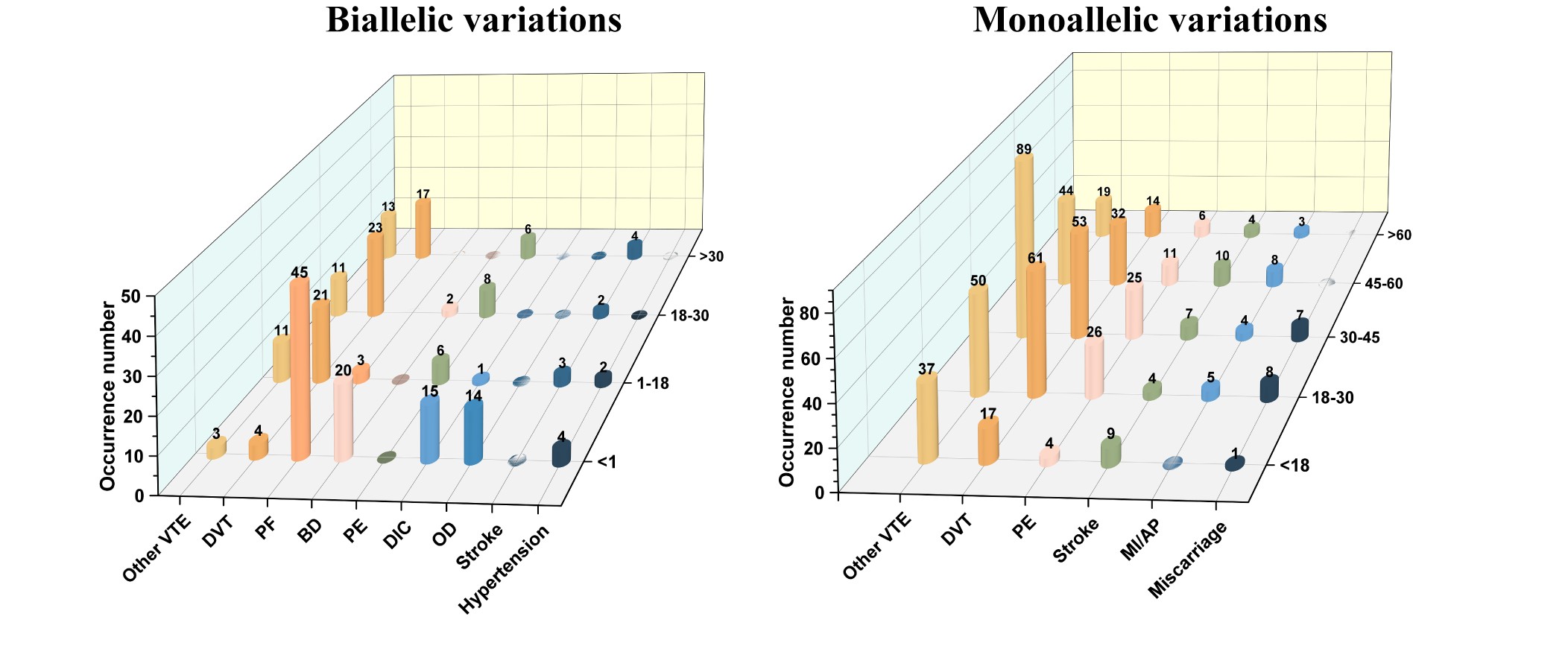
Monoallelic variation (MV) of PROC gene, referred to thrombophilia 3 (THPH3, OMIM#176860), is much more frequent (1/200 to 1/500 births) and usually cause PCD with clinical presentations varying from asymptomatic individuals to complications, such as deep venous thrombosis (DVT), pulmonary embolism (PE).
Biallelic variation (BV) referred to thrombophilia 4 (THPH4, OMIM#612304), is extremely rare (1/500,000 to 1/750,000 births) and can manifest as a severe disorder, such as purpura fulminans (PF) and disseminated intravascular coagulation (DIC), or a milder disorder with late-onset thrombophilia.
Gene and Protein Structure
Genomic Location: Chromosome 2q14.3
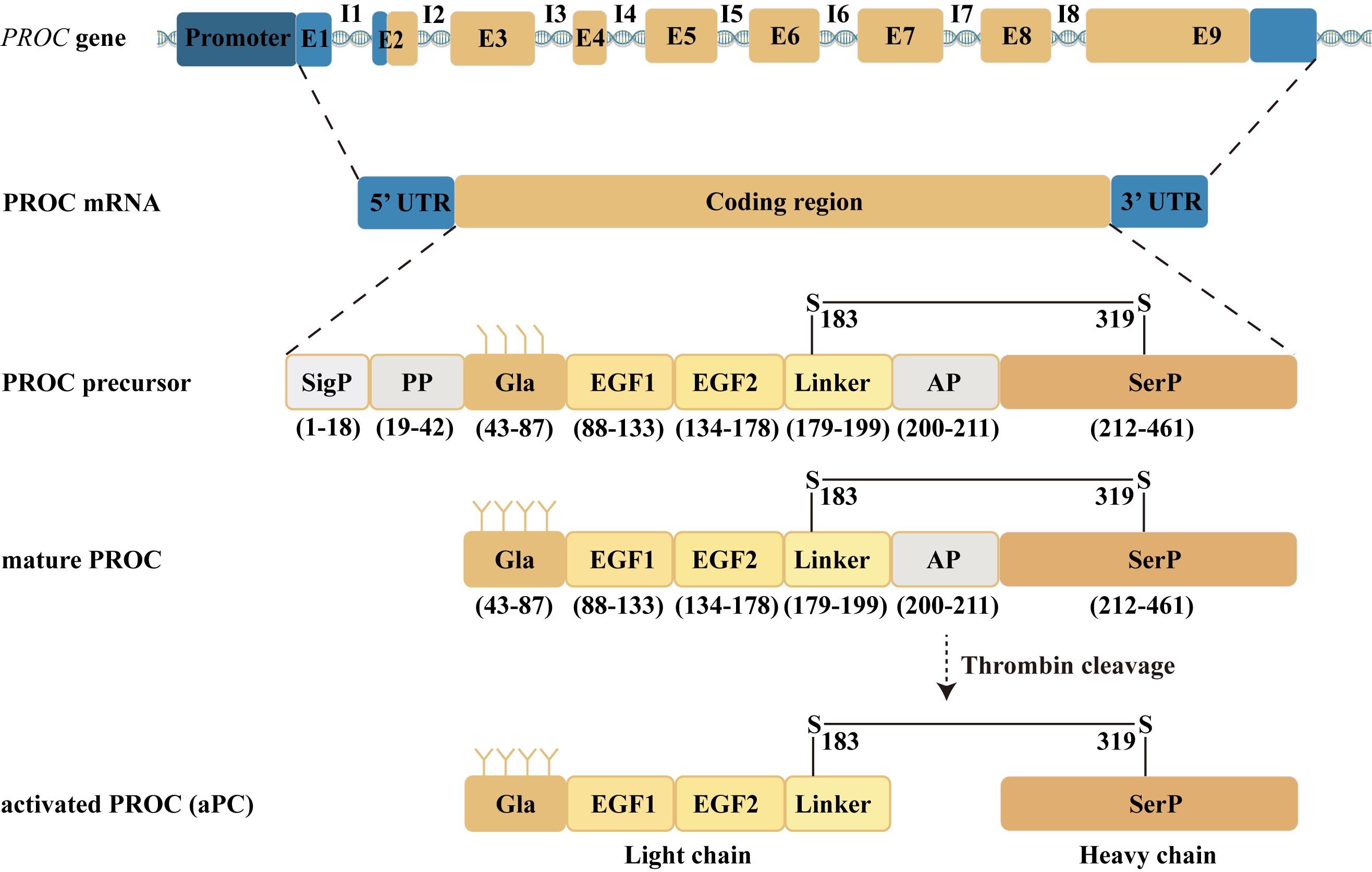
The PROC gene spans approximately 11.6 kb and contains 9 exons, which are transcribed into a 2.9 kb mRNA transcript (RefSeq: NM_000312.4).
Protein Overview
The mRNA translates into a precursor protein of 461 amino acids (RefSeq protein ID: NP_000303.1), which undergoes post-translational modifications to form the mature zymogen. This protein includes the following domains:
- Signal peptide: Residues 1–18, responsible for directing the precursor to the secretory pathway via co-translational translocation into the endoplasmic reticulum.
- Propeptide: Residues 19–42, providing the binding site for γ-glutamyl carboxylase (GGCX).
- Gla: Residues 43–87, which undergoes post-translational γ-carboxylation catalyzed by GGCX. This modification is essential for calcium binding and enables the protein to interact with the endothelial protein C receptor (EPCR).
- EGF-like 1: Residues 88–133.
- EGF-like 2: Residues 134–178.
- Linker: Residues 179–199.
- Activation peptide: Residues 200–211, cleaved by thrombin during activation.
- Serine protease: Residues 212–461, containing the catalytic triad necessary for enzymatic activity.
Synthesis and Maturation of PROC
The synthesis and maturation of PROC begins with transcription of the PROC gene into pre-mRNA in the nucleus. The pre-mRNA undergoes splicing to form mature mRNA, which is then exported to the cytoplasm. In the cytoplasm, the mRNA is translated by ribosomes into the PROC precursor protein, which is co-translationally translocated into the endoplasmic reticulum (ER). Within the ER, the protein undergoes folding and post-translational modifications, including calcium-dependent γ-carboxylation at the Gla domain, catalyzed by GGCX.
After modification in the ER, the PROC precursor is transported to the Golgi apparatus, where it undergoes further glycosylation. The mature proprotein is then packaged into secretory vesicles and transported to the plasma membrane. Upon secretion, PROC is released into the bloodstream as a zymogen, where it remains inactive until activated.

Activation and Function in the Coagulation Cascade
Activation
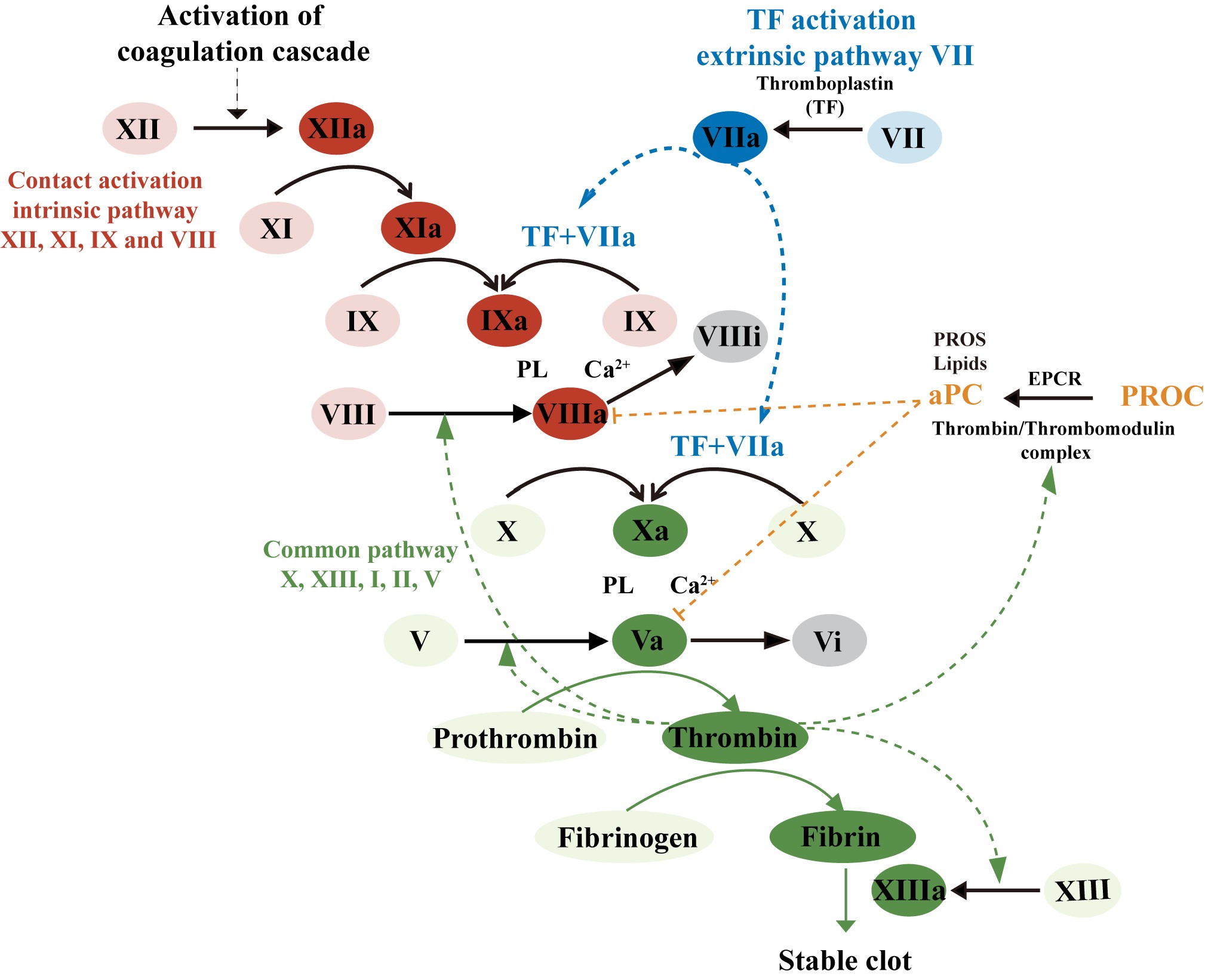
PROC is activated by thrombin in the presence of thrombomodulin (TM), forming activated protein C (aPC). The activation process generates a light chain and a heavy chain, which are linked by a disulfide bond between residues 183 and 319.
Role in Coagulation
aPC, in conjunction with PROS, inactivates procoagulant factors Va and VIIIa, serving as a critical anticoagulant.
This process regulates clot formation and helps prevent excessive thrombosis.
Additional Functions
Beyond its anticoagulant role, aPC exerts cytoprotective and anti-inflammatory effects by interacting with cell surface receptors, including the EPCR, to support vascular integrity and reduce inflammation.
Clinical Significance
PCD Diagnosis
Laboratory evaluation includes:
Protein C activity assay
Antigen assay
Genetic testing for PROC variations
Risk Assessment
Patients with monoallelic variations often have variable risk depending on additional factors.
Biallelic variation carriers typically present with early-onset, severe thrombophilia.
Therapeutic Approaches
Long-term anticoagulation therapy (e.g., warfarin, LMWH)
Protein C concentrate replacement in neonatal or severe cases
Potential gene therapy and targeted treatments under development
Useful External Resources
| Homepage URL | PROC Variant Database |
| LOVD3 | PROC |
| OMIM gene | 612283 (PROC) |
| OMIM diseases | Thrombophilia 3 (THPH3, #176860) |
| Thrombophilia 4 (THPH4, #612304) | |
| UniProt | P04070 (PROC) |
| HGMD | PROC |
| NCBI | 5624 (PROC) |
| PDB | 1AUT |
| Alpha-fold | Vitamin K-dependent protein C |
| SpliceAI | Tool Homepage |
| MutationTaster | Tool Homepage |